The First 250 Founders Decks Are Coming Soon -- Don't Miss Your Spot!
Beyond A-Z
INSIDE THE FORGE
2 min read
The Alphabet Isn’t the Problem
The alphabet is useful. Letter names matter. But letters are not meaningful on their own. They matter most when they help children connect spoken language to print.
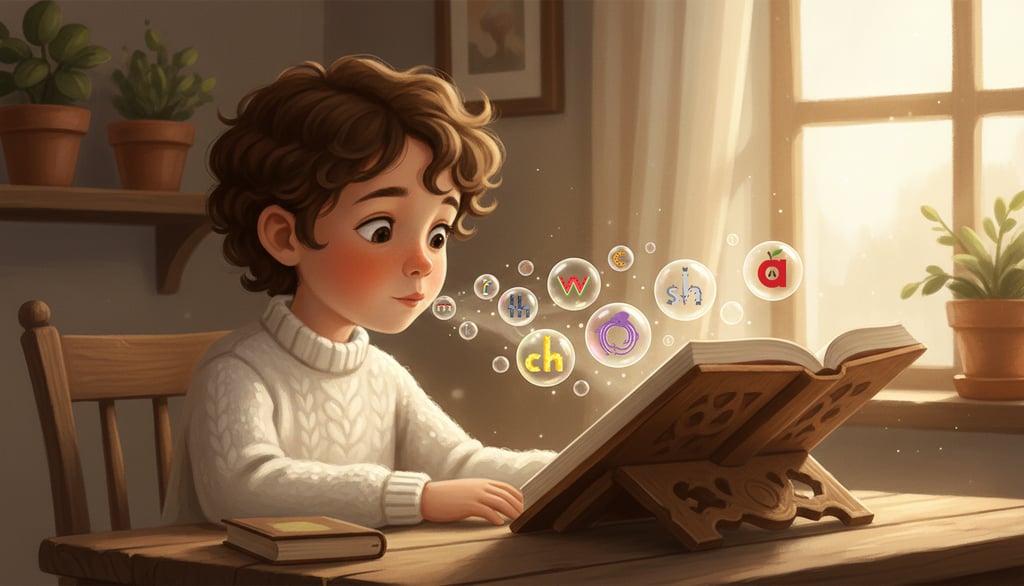
Children learn to talk first. They hear sounds, blend them together, and store words in memory long before they ever see a book. Reading asks them to do something new: match those familiar spoken sounds to visual symbols.
When that connection is clear, reading makes sense. When it isn’t, children are left guessing.
Reading Is a Visual Code for Speech
Reading is not about memorizing symbols. It is about understanding how speech is written down.
Some sounds are written with one letter. Others are written with two. That doesn’t make them harder or more advanced—it simply reflects how English works.
Children already use sounds like sh, ch, and th every day when they speak. If reading instruction doesn’t show how those sounds appear in print, children are asked to work with an incomplete system. They know the sound, but they don’t know how to see it.
Why A–Z Alone Leaves the Code Incomplete
Traditional phonics instruction often starts by limiting children to single letters only. Digraphs and other multi-letter sound spellings are treated as something to learn later, after children have “mastered” the basics.
But this approach can unintentionally create confusion.
Teaching reading as a one-letter-to-one-sound system gives children a simplified version of English that doesn’t match what they actually encounter in books. When digraphs eventually appear—and they appear early—children have to relearn how the system works.
It’s not that they can’t do it. It’s that they shouldn’t have to undo what they were taught in the first place.
Every Spoken Sound Deserves a Visual Symbol
A helpful way to think about this is through a sports analogy.
Introducing digraphs only after mastering single letters is like teaching a child to play soccer but telling them they can only use their left foot for the first two years. When they are finally “allowed” to use both feet, they’ve already developed habits that no longer make sense for the real game.
Integrated instruction lets children see the full field from the start.
Some letters, like teammates, only do certain jobs when they work together. S and H are not two separate sounds when they appear together. They are one sound. Children already know that sound when they speak. Reading instruction should simply show them how that sound looks in print.
This matters because children meet digraphs early and often in beginner texts. When those sounds are treated as normal parts of the system—rather than exceptions—reading feels more honest and more predictable.
Research supports this approach. Studies with kindergarten-age children show that teaching single letters and two-letter sound spellings together (often called mixed-grain size instruction) is especially helpful for children who are at risk for reading difficulty (Vadasy & Sanders, 2021). When children are given visual access to the full sound system from the beginning, they form clearer, more accurate understandings of how print works.
Making Reading Make Sense
Going Beyond A–Z means keeping reading instruction realistic and functional. Lets show children how the sounds they already say appear in print, so reading feels understandable and usable from the start.
References
Vadasy, P. F., & Sanders, E. A. (2021). Introducing grapheme-phoneme correspondences (GPCs): Exploring rate and complexity in phonics instruction for kindergarteners with limited literacy skills. Reading and Writing: An Interdisciplinary Journal, 34(1), 109–138. https://doi.org/10.1007/s11145-020-10064-y
Questions? We're happy to help.
info@graphonicmnemonics.com
© Graphonic Mnemonics LLC | Privacy Policy | Terms & Conditions