The First 250 Founders Decks Are Coming Soon -- Don't Miss Your Spot!
Multisensory Approach
INSIDE THE FORGE
2 min read
Why Multisensory Learning Feels Natural
Children don’t learn by sitting still and staring at a page. They learn by watching, listening, touching, moving, and talking—often all at the same time. When learning reflects this natural process, it becomes easier to understand and easier to remember.
This is what a multisensory approach is really about: teaching in a way that matches how children actually learn.
Learning Happens Through More Than One Sense
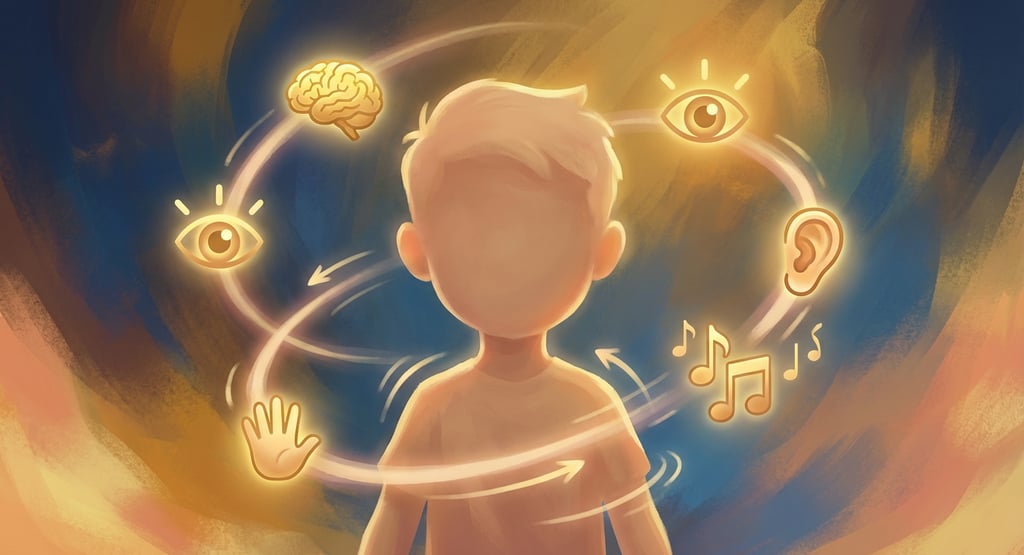
Multisensory learning simply means engaging more than one pathway at a time. Children are supported when they can:
see what they are learning
hear it and say it out loud
move their bodies as part of the activity
touch and handle materials
When these experiences happen together, learning becomes more meaningful. Instead of memorizing isolated pieces of information, children build connections they can use again and again.
Why Seeing and Hearing Work Better Together
Early reading depends on understanding how spoken language connects to print. When children can see a visual cue while hearing and saying a sound, the connection becomes clearer.
In play-based learning, visuals support memory while spoken language gives those visuals meaning. Children begin to recognize patterns not because they were told to memorize them, but because they’ve experienced them repeatedly in context.
Why Movement and Touch Matter
Movement and touch are not distractions—they are powerful learning tools.
When children are allowed to move, point, reach, flip, and sort, they stay engaged longer and process information more deeply. Holding materials, manipulating pieces, and using their bodies helps anchor learning in a physical experience.
This kind of hands-on interaction supports attention, memory, and confidence, especially for young learners.
When Learning Feels Like Play, Practice Happens Naturally
Multisensory learning often looks like play—but beneath the play is purposeful practice. Children repeat skills without feeling like they are drilling because the repetition is built into the activity itself.
They are focused on the game, the turn, the pattern, or the goal, and learning happens along the way.
More Senses = Stronger Learning
Not every child needs multisensory instruction—but many do, and certainly all children benefit from it. When learning engages seeing, hearing, moving, and touching, it becomes more accessible, more memorable, and more engaging. Multisensory learning gives children more ways to understand, participate, and succeed.
Questions? We're happy to help.
info@graphonicmnemonics.com
© Graphonic Mnemonics LLC | Privacy Policy | Terms & Conditions